Ritter Palace Lucerne

The Ritterscher Palace is arguably the most impressive Renaissance palace in old Lucerne. It was commissioned in 1556 by Mayor Lux Ritter.


Lux Ritter amassed great wealth as a mercenary leader and intended to build a residence in the style of the Florentine Renaissance, featuring heavy masonry and exquisite stonework. 

Although this style was already a century old in Florence, it was revolutionary for Lucerne. Ritter recruited numerous builders from the South, who created an incomparable structure that has been preserved for centuries.


At that time, Lucerne had no more than 5,000 inhabitants, and most houses were made of wood. There were only a few private stone buildings, such as the still-standing Haus zur Gilgen or the long-demolished Hertenstein House, which was famously decorated with frescoes by Hans Holbein.


A renowned stonemason of the era was Giovanni Lyn, also known as Hans von Trient. He was initially reluctant to work for Lux Ritter. Ultimately, his fervent faith led to disaster: he was accused of heresy, found guilty, and beheaded.


On the day of his execution, Hans von Trient is said to have cursed Lux Ritter. Whether by coincidence or not, Lux Ritter died only a few days later.


At the time of Ritter's death, the three-story palace with its open courtyard was about two-thirds complete. His heirs were unable to continue the project, so the City of Lucerne took over and finished the construction.


Then came the era of Ludwig Pfyffer von Altishofen, who became the most powerful man in Lucerne. He ruled with such authority that he was nicknamed the "Swiss King."


In 1578, Pfyffer handed the building over to the Jesuits, whom he had invited to Lucerne. They established a church on the ground floor, as seen on the Martiniplan (the city map by Martin Martini). This church was later replaced by the larger Jesuit Church nearby. Martini’s copper engraving also shows that the courtyard was originally open to the south.
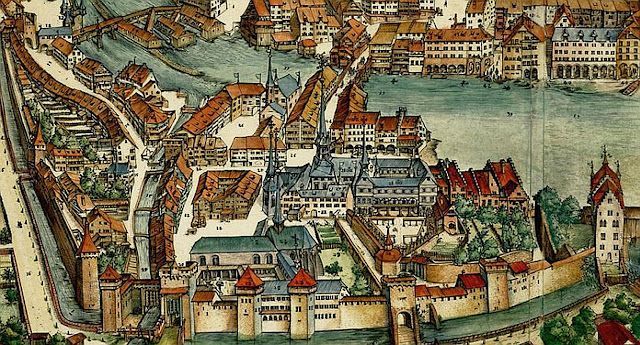
Martiniplan 1597, detail: Ritterscher Palast


Following the Sonderbundskrieg of 1847 (the Swiss civil war), the Jesuits were expelled from Lucerne and Switzerland. All Jesuit property was seized by the state. Consequently, the Ritterscher Palace became the government building (Regierungsgebäude) of the Canton of Lucerne.


The third floor of the building houses the famous "Dance of Death" paintings by Jakob von Wyl. You can discover them during a 'Medieval City Walk' or a 'Nightwatchman Tour'.
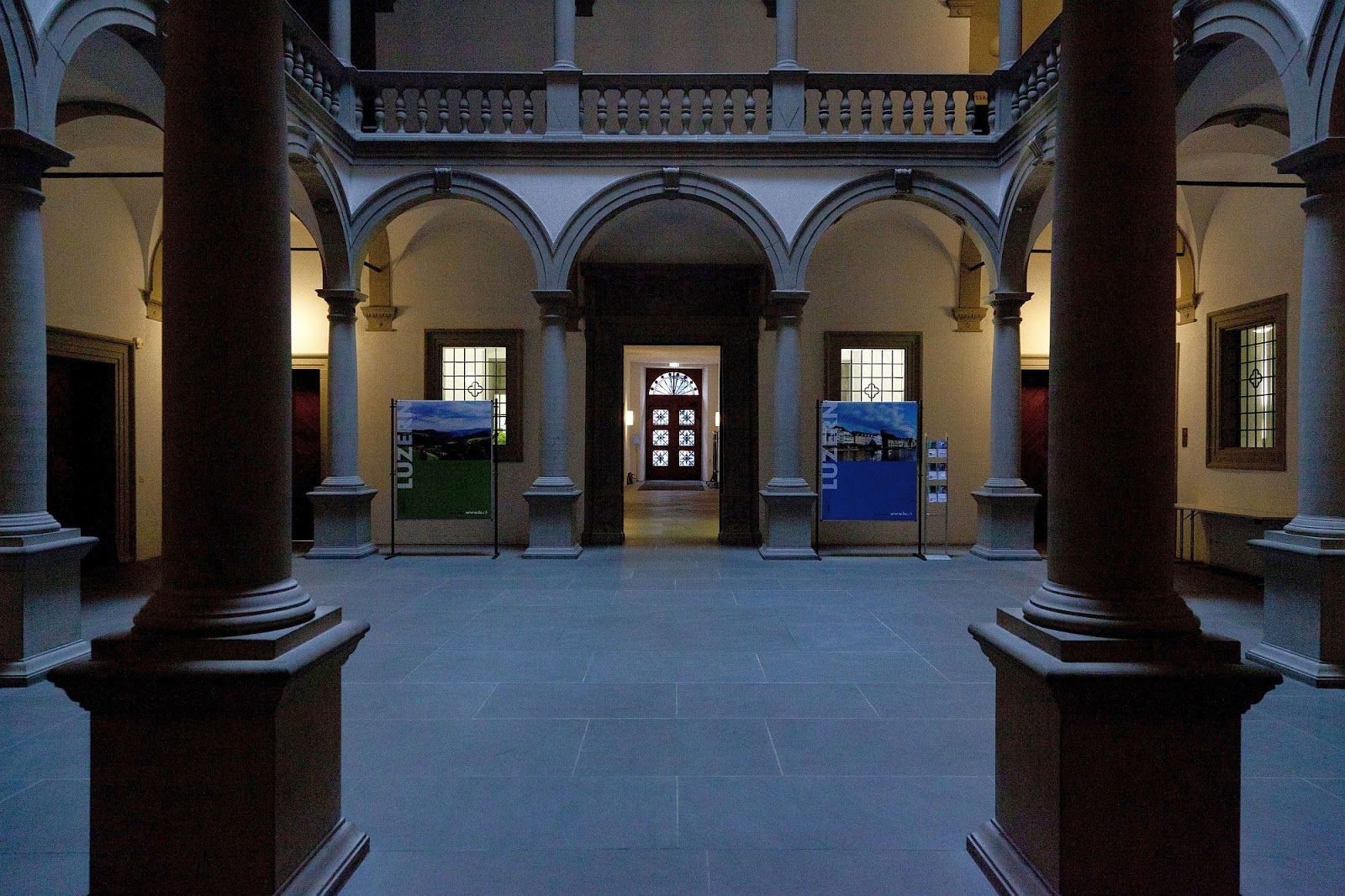

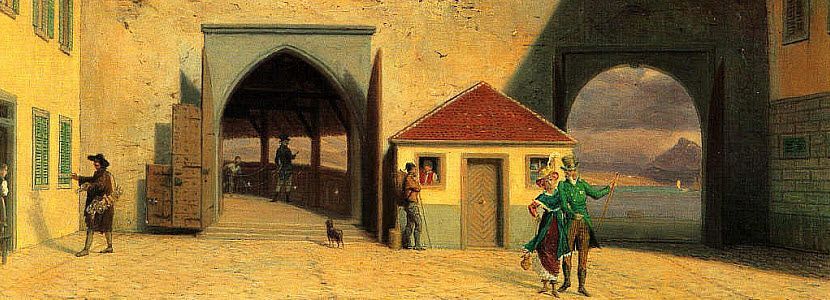
Court Yard of Ritter Palace, Lucerne


Visitor Information

  • The building is generally open to the public from Monday to Friday. However, it may be closed at any time for official government events or state receptions.
  • Admission is free.
  • When visiting, please respect the fact that the offices of the Cantonal Administration are located around the courtyard. You are kindly requested to keep noise to a minimum.
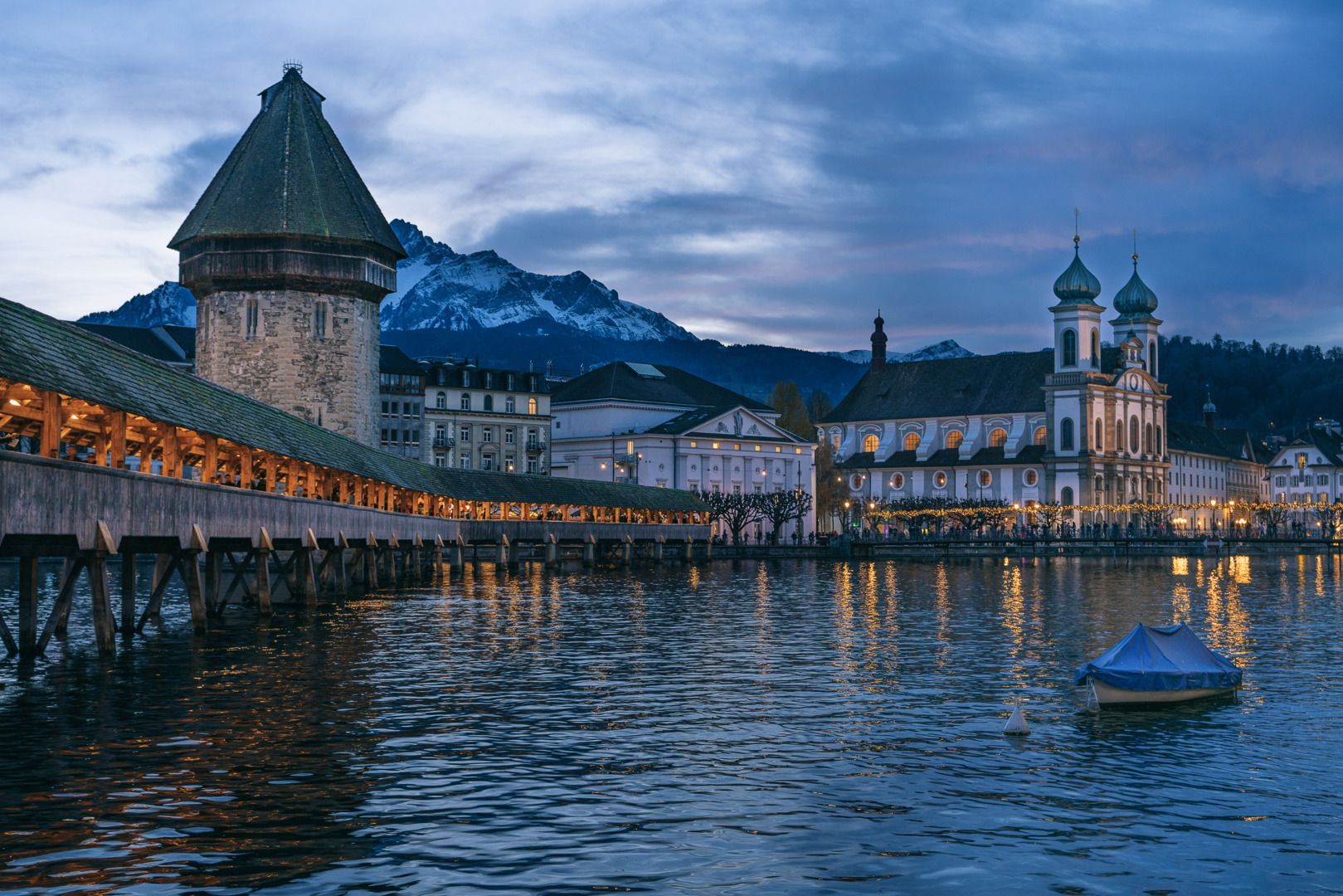
© Lucerne Tourism / Ivo Scholz | Switzerland Tourism
By Ralf Fioretti December 4, 2025
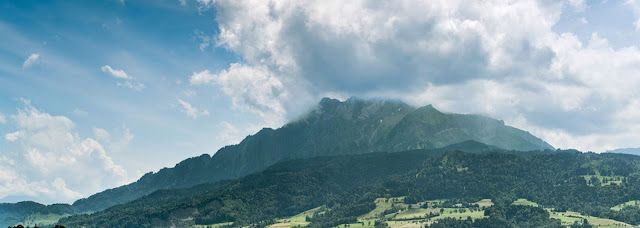
Mount Pilatus strongly stimulated the imagination of the people in Switzerland early on. This was because it seemingly rose gently from the flatlands, but then suddenly jutted steeply upwards in massive rock formations. The ancients called it "Fractus mons" (broken mountain) or Frakmont . They considered it nothing more than a split and broken-up mighty hill. Since the people of antiquity could not explain the elemental forces that once split the mountain, they saw in them the work of evil powers. Because fire, water, storms, and lightning had always terrified the residents, they believed that these forces were causing mischief on the mountain. In the ignorance of the Middle Ages, one thing was clear: spirits lived there. In the stories, one heard of dragons, ghosts, spirits, hobgoblins (Herdmännlein), and mischievous dwarves (Toggelis); even the Türst and the Sträggele caused trouble there.
Martini Plan 1597, detail
By Ralf Fioretti November 15, 2025
Lucerne, 1758. The Golden Time of the Republic was coming to its autumn. Wars and bad harvests in Europe meant that the soldier contracts, which the city lived from, were paid slowly. This made the state treasury, the heart of the Lucerne Republic, even more important.  It was stored in the safest place you could think of: in the upper room of the Water Tower. The Reuss river flowed around it, and you could only reach it over the Chapel Bridge or by boat.
The war horn in the Historical Museum Lucerne, Photo: 12Nov25.
By Ralf Fioretti November 14, 2025
A painting on the Chapel Bridge (panel Nr. 25) once showed a famous Lucerne legend: The Emperor Charlemagne giving special "Harsthörner" (war horns) to warriors from Lucerne to honor them. (Please note: This original painting was unfortunately destroyed in the 1993 Chapel Bridge fire and is no longer on the bridge.) The legend says that in 778, warriors from Lucerne joined Charlemagne’s army in Spain. They bravely saved his nephew, Roland, in a battle. As a "thank you" for their loyalty and courage, the emperor gave them the special war horns, a great privilege.
Riese von Reiden Johann Leopold Cysat Vier Wald Staettersee 1661
By Ralf Fioretti November 9, 2025
A famous painting on Lucerne's Chapel Bridge (Panel No. 1) shows an old city legend. It pictures a giant man with a tree trunk standing next to a normal-sized man.
Lucerne Schilling, 1513, Folio 210r (P.425). A servant in Bellinzona, who wanted
to betray the city
By Ralf Fioretti November 8, 2025
Just like any good craftsman, the executioner tried to do a "clean" job. When it came to torture, he was only allowed to go as far as it was useful—he wasn't supposed to kill them. The executioner had to be extremely careful that the tortured prisoners didn't die, so they could still be brought to their "real" punishment.
Luzerner Schilling Folio 174v (P. 352), detail
By Ralf Fioretti November 6, 2025
In the beginning, as serfs of the Hofkloster (monastery), we got our judgement at the Marienbrunnen (Mary's fountain) by the stairs of today's Hofkirche. From the middle of the 13th century, the Habsburgs allowed us to hold court ourselves . This happened at the lower fish market (unterer Fischmarkt), by the court linden tree. Later, the first town hall of Lucerne (the building before today's Hotel Des Balances) became the court place. The executions happened at the Sentimatt execution place .
detail: the  wild hunt, Peter Nicolo
By Ralf Fioretti October 25, 2025
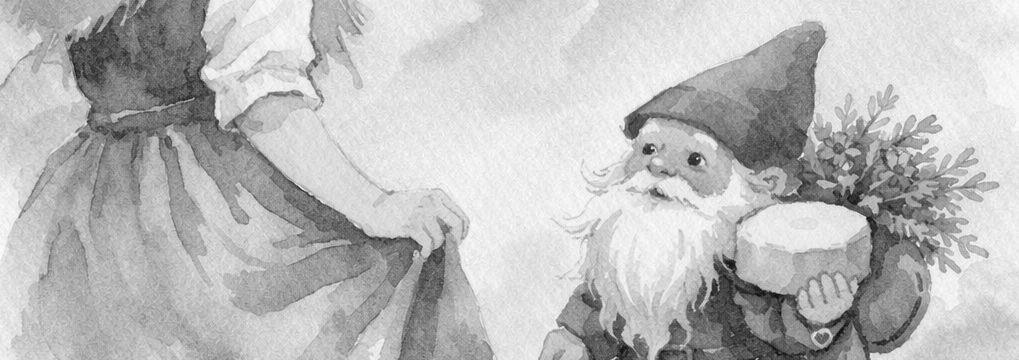
On the heights of Mount Pilatus, a ghostly figure roams—a creature that is part "wild man," part "spirit," part "warrior," and part "god." This being, called Türst , causes great trouble for the alpine herdsmen and torments their cattle in many ways. His power is strongest when the herdsmen stray from a godly life. He is a fearsome hunter from the underworld. At nightfall, Türst prepares for the hunt. He drives the poor cattle before him, scaring and confusing them so much that they run wildly in all directions. Sometimes, they even leap down into the valley, forcing the herdsmen to struggle to bring them back up. The cows remain without milk for a long time after such encounters. When Türst approaches, he blows a powerful hunting horn. Every animal that hears it must come and stand before him. He is often accompanied by a pack of hellish dogs , all of which have only three legs . Leading the pack is a massive dog with a single eye in the middle of its forehead . This dog jumps ahead, with the entire pack stumbling behind it, constantly falling over due to their missing legs. In the middle of it all is Türst , part hunter, part spirit, part ghost, and part warrior.
Public transportation map of Lucerne
By Ralf Fioretti May 2, 2025
The Lucerne Visitor Card is a thoughtful welcome gift for overnight guests staying in a hotel in the city. Previously known as the "Guest Card," it offers great benefits to make your stay more enjoyable. 
©  Nicole Schafter I Lucerne Tourism I Switzerland Tourism
By Ralf Fioretti May 1, 2025
The purest and best-tasting water in Lucerne can be found in the fountains of the historic old town. Unlike the houses and hotels, which receive their water through pressure pipes, these fountains have their own independent water supply, dating back to the Middle Ages.
Treadwheel Crane  at the Hofkirche, Luzern
By Ralf Fioretti April 10, 2025
On Folio 3r of Diebold Schilling's Lucerne Chronicle, a treadwheel crane is depicted in the construction of the first monastery church at Hof in the 8th century.