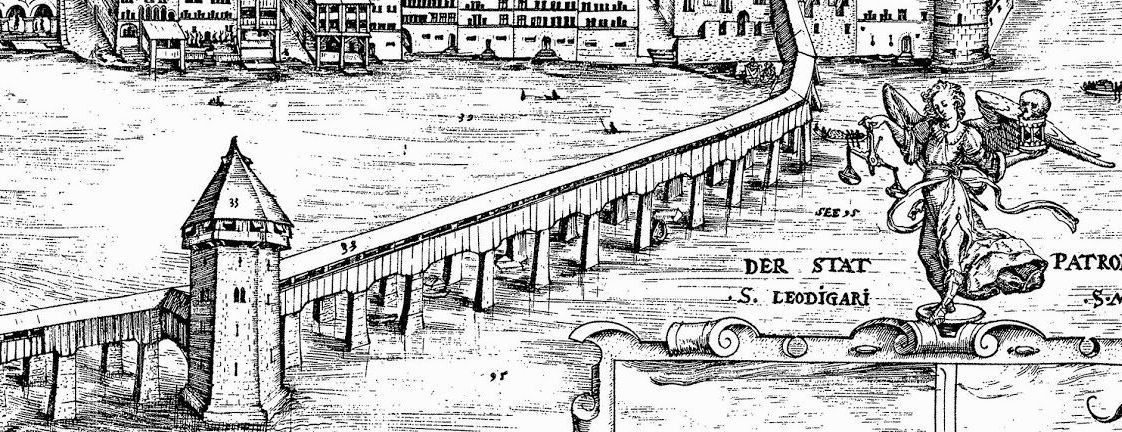
The Treadwheel Crane in the Church of St. Leodegar (Hofkirche)
On Folio 3r of Diebold Schilling's Lucerne Chronicle, a treadwheel crane is depicted in the construction of the first monastery church at Hof in the 8th century.
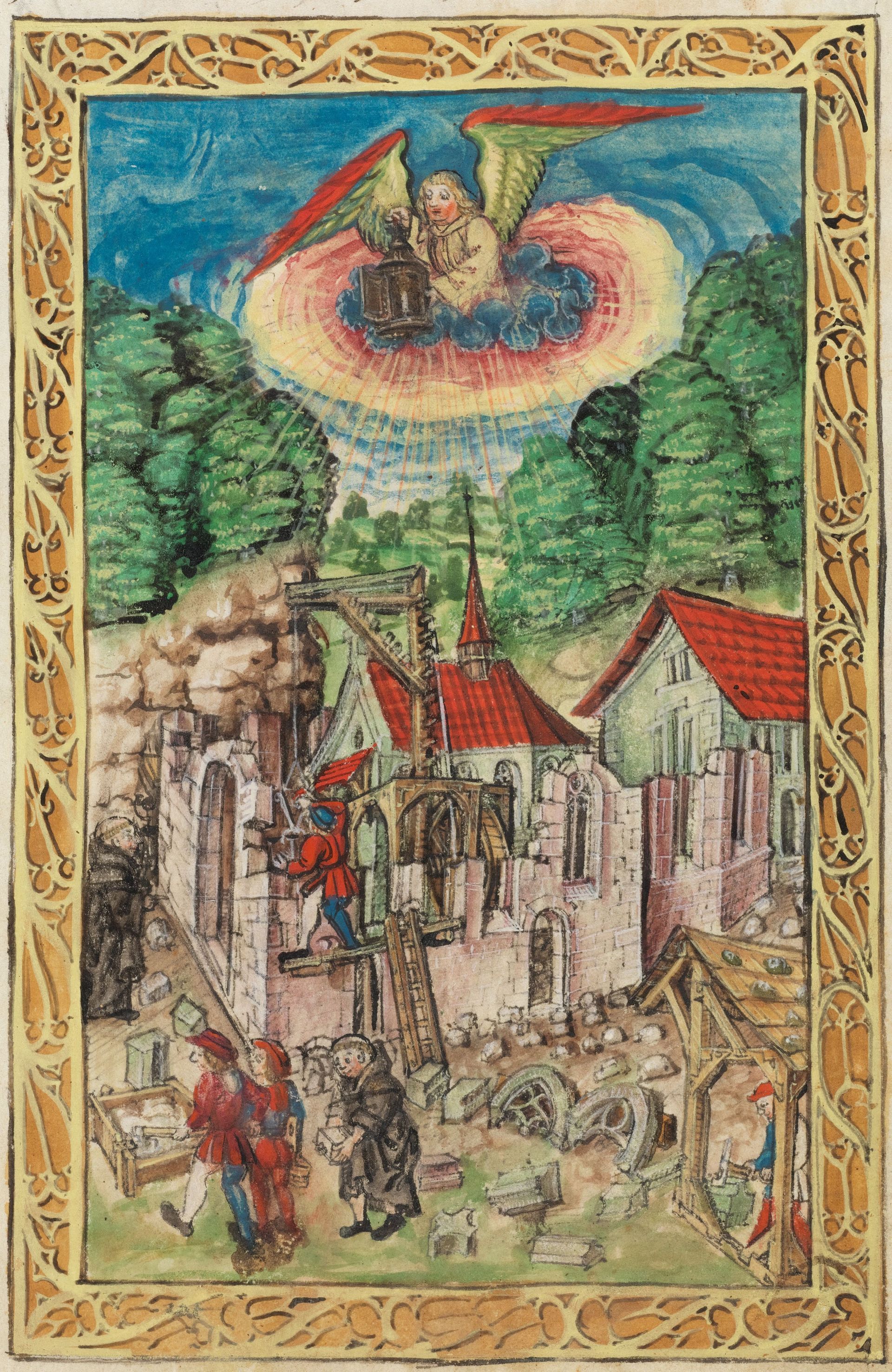
Luzerner Schilling, 1513, Folio 3r, S.15
At the heart of the image, a treadwheel crane is visible. What appears to be a gallows is actually the crane’s frame. Beneath it, the large wheel functions as a treadmill, powered by human effort—similar to a hamster wheel. The crane rope runs from the treadmill over the frame to a corner pillar. Attached to the rope is a stone clamp (also called Wolf or Wolf’s Tongs), which grasps a stone block. A worker, dressed like a town servant, ensures the block is positioned correctly.
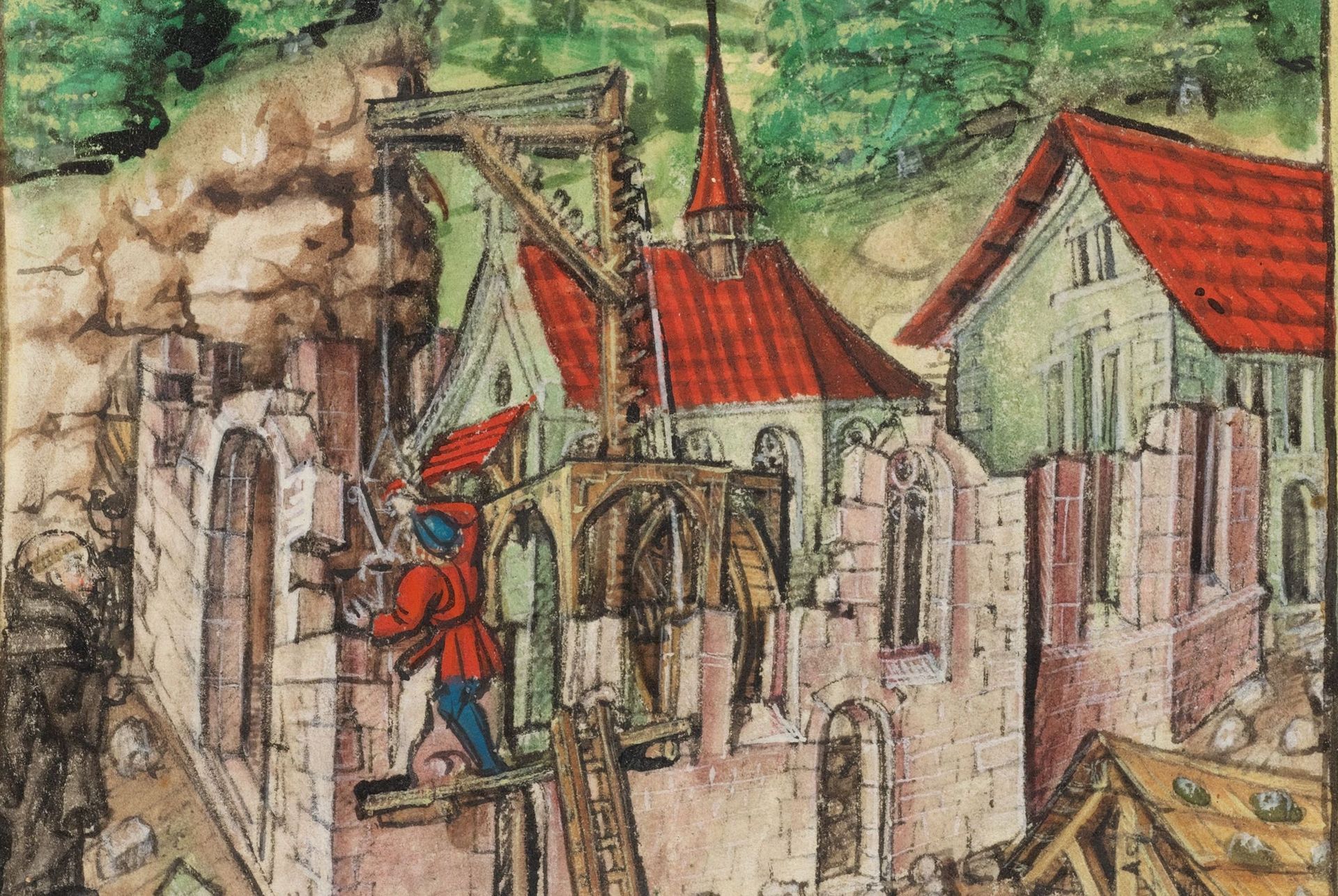
The Stone Clamp
When the crane rope is pulled up, the clamp tightens around the stone, allowing it to be lifted securely. Small indentations are carved into the sides of the block to prevent slipping. By utilizing its own weight, even the heaviest stones can be raised efficiently.
A Historic Treadwheel in Lucerne
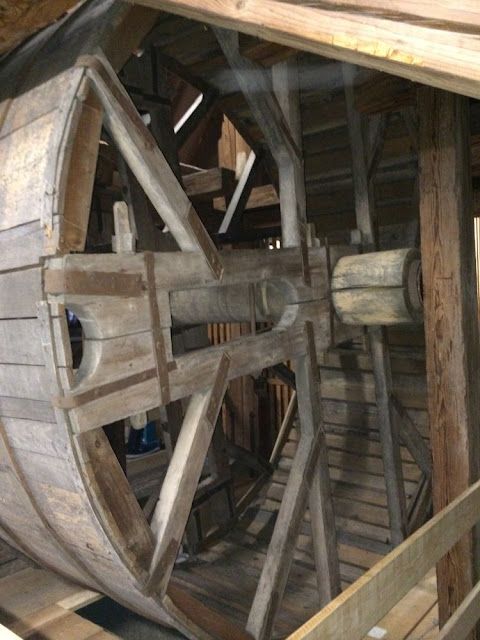
Lucerne still preserves a historic treadmill, located in the attic of the Hofkirche. To this day, it is used during the Ascension Day service to lift an image of Christ.