The Pillory of Medieval Lucerne
In the Middle Ages, every city had a pillory. It was used to punish minor crimes. The offender was chained to the pillory for a certain time so that the people could mock him, spit on him, and throw dirt at him. Being “put in the pillory” was a punishment of shame. Beatings, branding, and mutilations were also carried out at the pillory. For people sentenced to death, the pillory was only one stop on the painful way to execution.
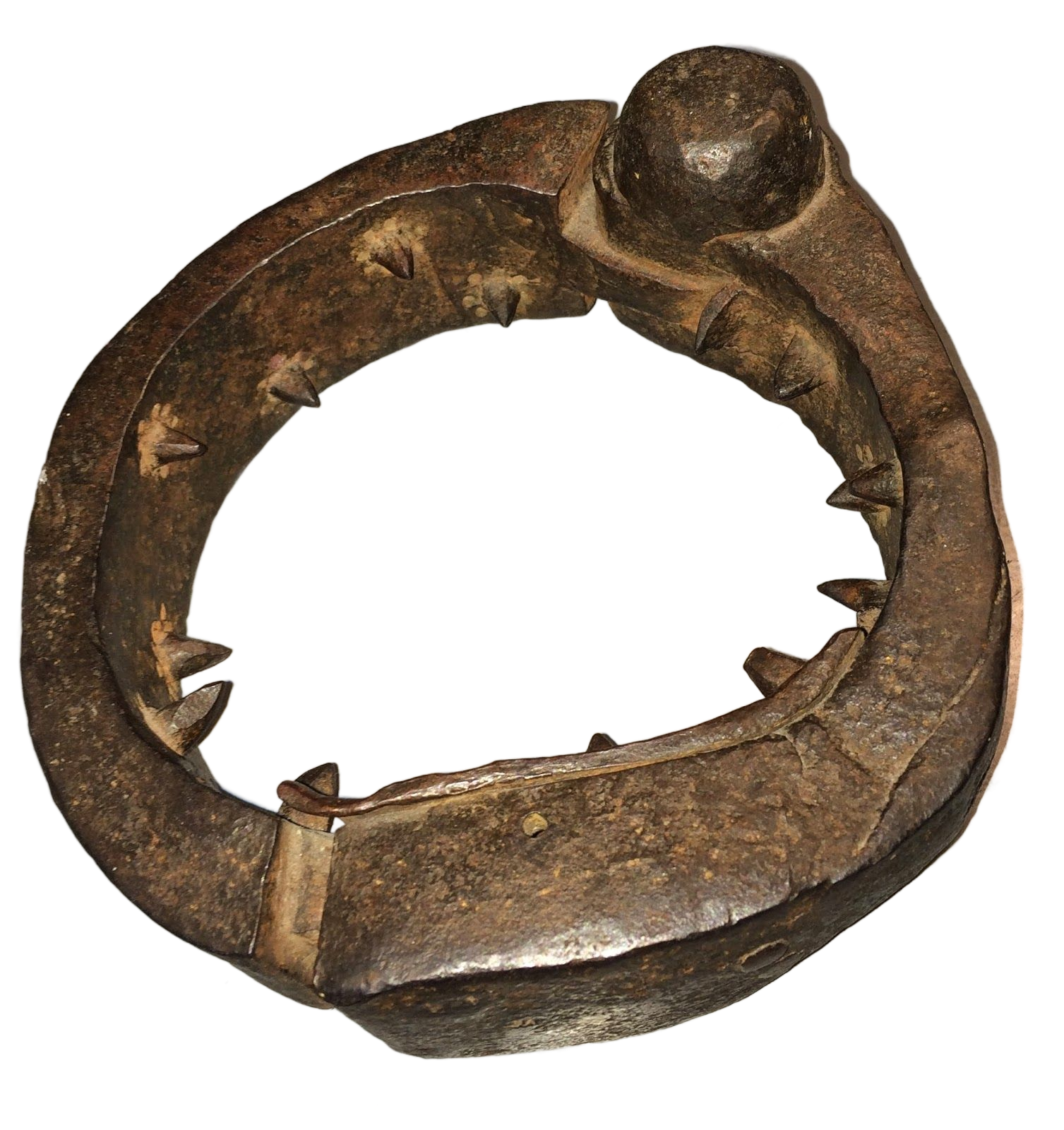
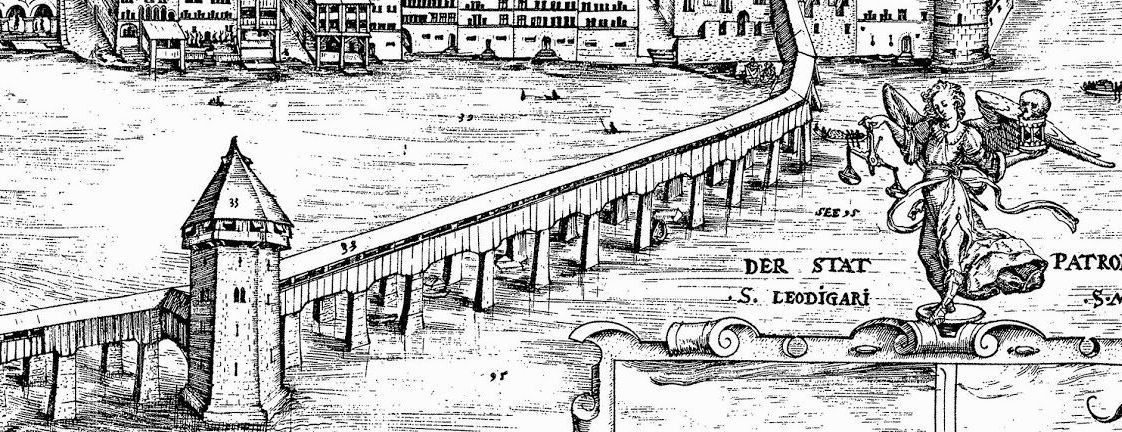
In Lucerne, a pillar pillory stood in the lower part of the old fish market. The iron neck rings that belonged to it are shown in the Historical Museum. The pillory itself no longer exists, but it can be seen in the Martini Plan of 1597.
In the 13th century, the Habsburgs allowed the authorities of Lucerne to hold their own court. The legal basis for this was the “Geschworener Brief” (Sworn Letter) of 1251, which was expanded over time.
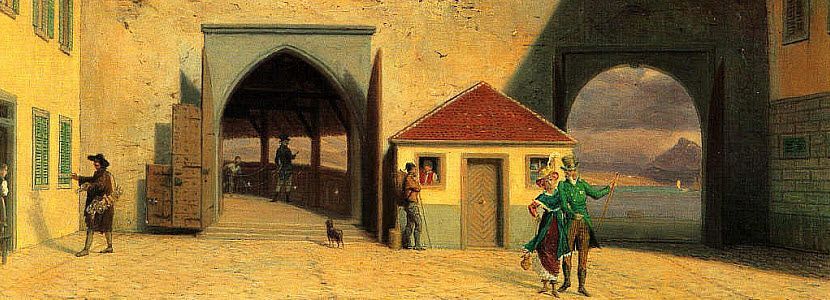
At first, judgments were made outdoors under the linden tree, where the pillory also stood. Later, the court moved into the neighboring house, which is today the Hotel des Balances. Court and council were the same, because the council also acted as the court.
Even later, sentences were announced here on the open square, while the offender was placed in the pillory. The restaurant “Rotes Gatter” refers to the “blood-red” barrier of high justice. The restaurant “Zur Linde” also stands on the square, and in front of it a linden tree was planted again in 1978.
Further information:
The nearest remaining pillory is located at the town hall of Sursee (image, Wikimedia).

Iron neck ring of the pillory in Lucerne – Historical Museum of Lucerne.