The Rössli Inn and the Old Water Rights
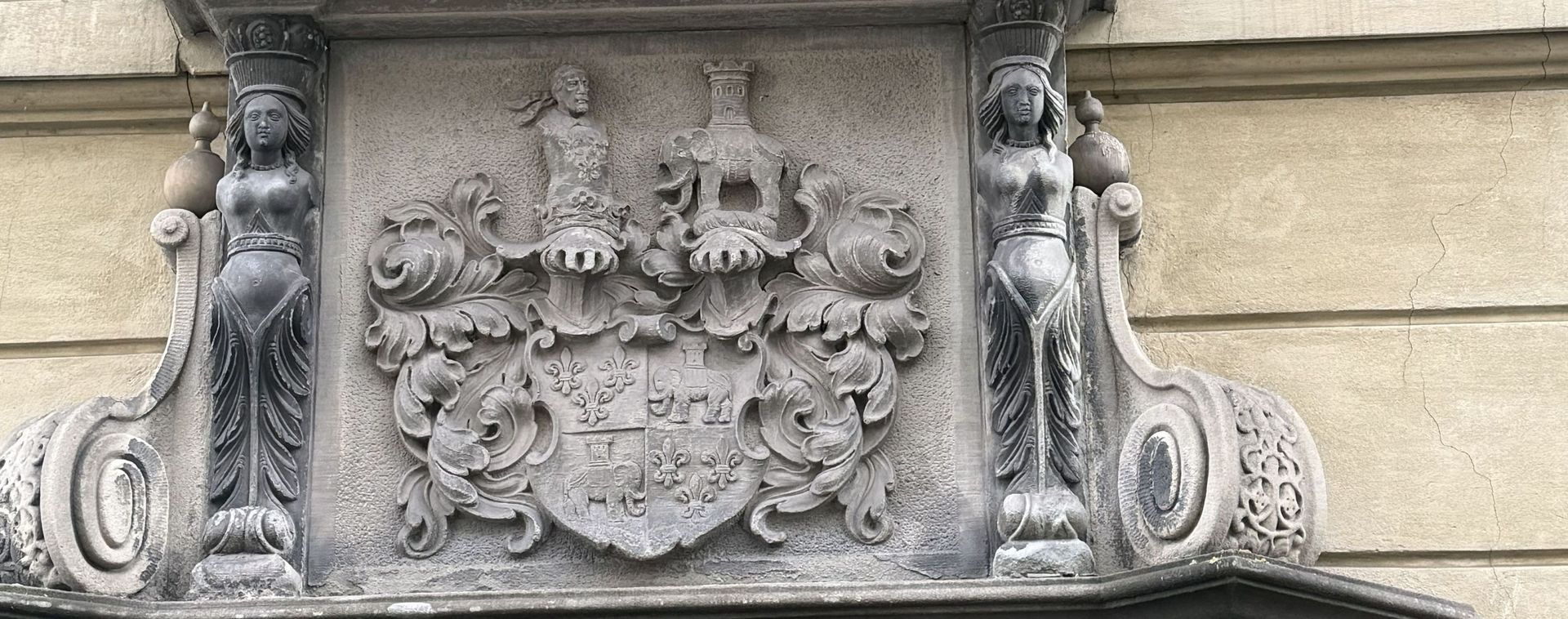
The former Rössli Inn was the first luxury hotel in Lucerne with its own water fountain. In the early 16th century, it was the preferred accommodation for French ambassadors. The inn had around 20 beds, along with stables and fodder for horses and livestock — standard features of a hotel at that time. Its unique feature, however, was its own fountain.
The Rössli Inn in the Diebold Schilling Chronicle
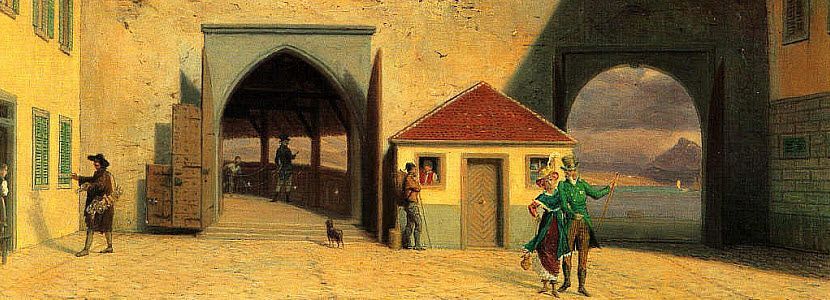
In Folio 310v of the Diebold Schilling Chronicle, we see an illustration of the arrival of the French treasurer in Lucerne in 1509.
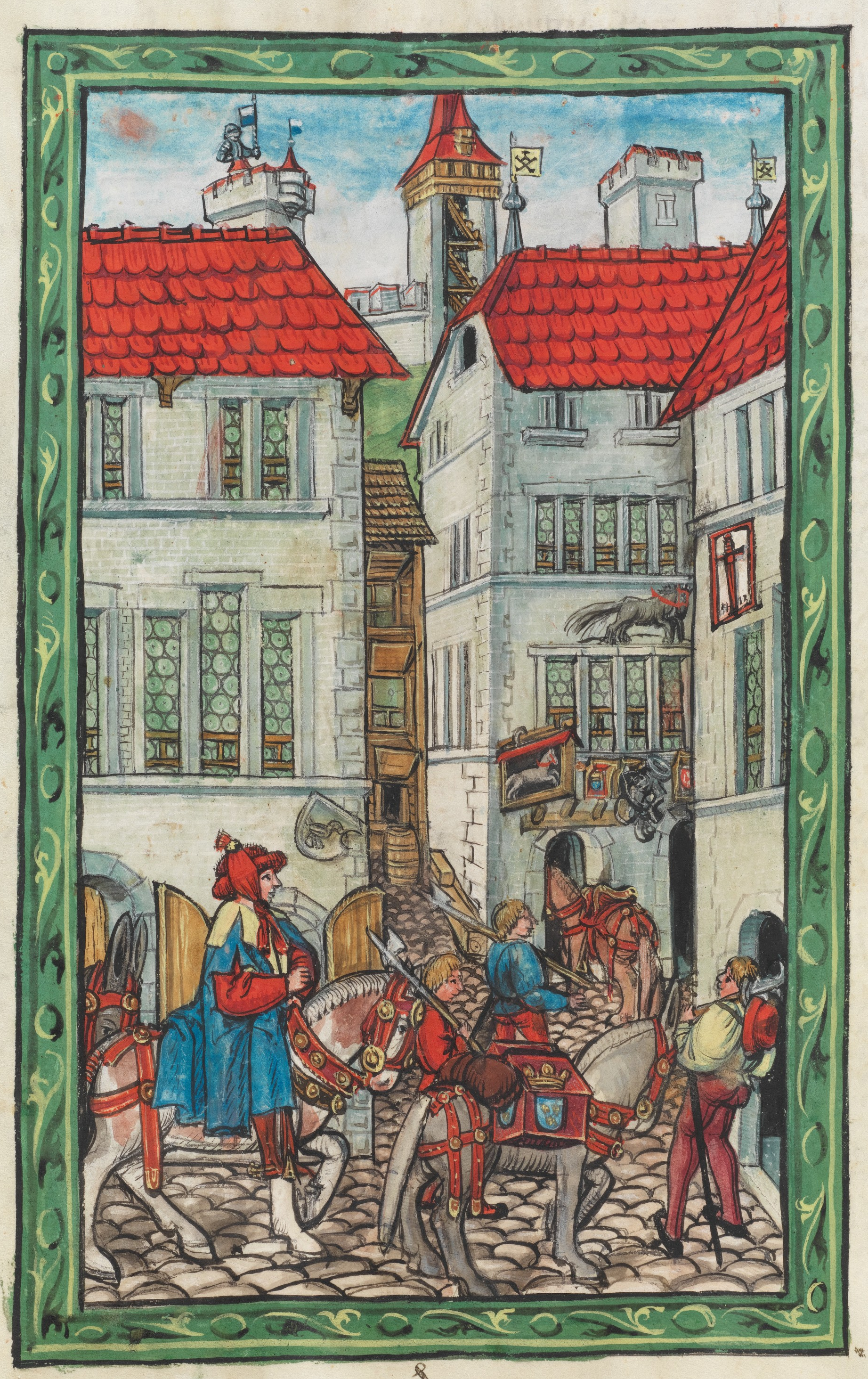
Diebold Schilling Chronicle of 1513,
Folio 310v, S.628.
Arrival of the French Treasurer in Lucerne with recruitment funds for Swiss mercenaries.
The Scene
The French treasurer brings pension funds to Lucerne to recruit mercenaries:
- In the background, three Musegg Towers can be seen: Mändli, Luegisland, and Wachturm.
- In the foreground, three stone buildings appear — all inns, as shown by their inn signs:
- On the right: the “Schwert” (Sword)
- In the center: the “Rössli” (Little Horse)
- On the left: the “Raben” (Raven)
- The weathervanes on the roof of the Rössli Inn display the coat of arms of its innkeeper, Peter Zumkäs.
- Next to the inn sign, a rack for hanging bridles can be seen. Below it, a horse is entering the stables, located where the entrance to Coop City is today.
- In the foreground, the French treasurer, wearing a blue cloak, rides into the city surrounded by armed men.
- To his right, a mule loaded with treasure chests belonging to the French crown is visible.
- Another mule carrying more chests follows behind.
Around 1514, the city of Lucerne built a fountain in the Rössli Inn. The inn was granted this fountain under one condition: anyone lacking or needing water could collect it from the Rössli fountain.
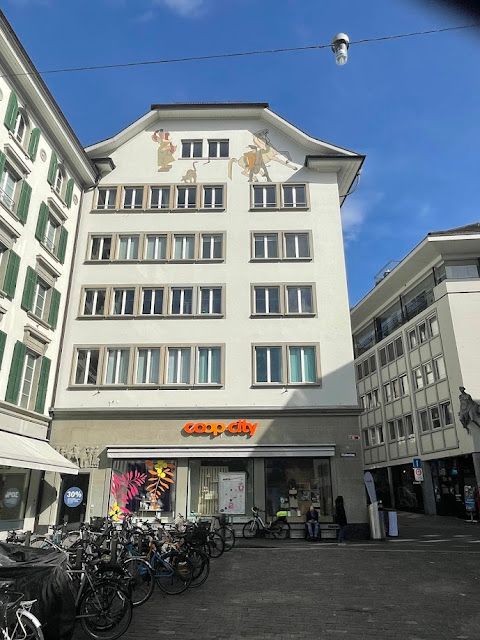
Today, the original Rössli Inn no longer exists. Instead, the Coop City building stands in its place. However, the old water rights still apply:
- The building still has its own fountain.
- It must provide water to everyone in order to maintain this historical right.
- This increases the property’s value, so the owner ensures that public access to water is always maintained.
How the Historical Water Right Is Preserved Today
The Coop supermarket has leased the entire building. Today:
- A decorative fountain in the self-service restaurant on the top floor always has running water.
- In front of the building, a modern drinking fountain is available.
These measures preserve the historical water right, ensuring the tradition continues.
P.S. In the
basement of the building, there is one of
three supermarkets in the historical center.
On the
top floor, there is a
good, budget self-service restaurant
(Weekdays 09:00–19:00, Saturdays 09:00–17:00, Sundays closed).